
Summit County Criminal Court Records
A criminal court record begins when a prosecutor files a charge in court and the clerk opens or maintains the case file. In Summit County, felony criminal matters are District Court cases, while many misdemeanors and traffic-related criminal matters are County Court cases. Municipal courts in Silverthorne, Dillon, Keystone, Frisco, and Breckenridge may hold ordinance or municipal-ticket matters that are separate from state court files.
The criminal court file is the court-side record. It may contain the complaint or information, charge list, arraignment, plea, motions, hearings, protection orders, disposition, sentence, and Register of Action. The sheriff arrest report and booking photo are criminal justice records requested from the Sheriff's Records Section, while the court case file is requested through Summit Combined Courts. For the charge pathway itself, use the related Summit County arrest records and court charges page.
For the official criminal and arrest sealing help page, see the Colorado Judicial Branch Seal My Case resource.
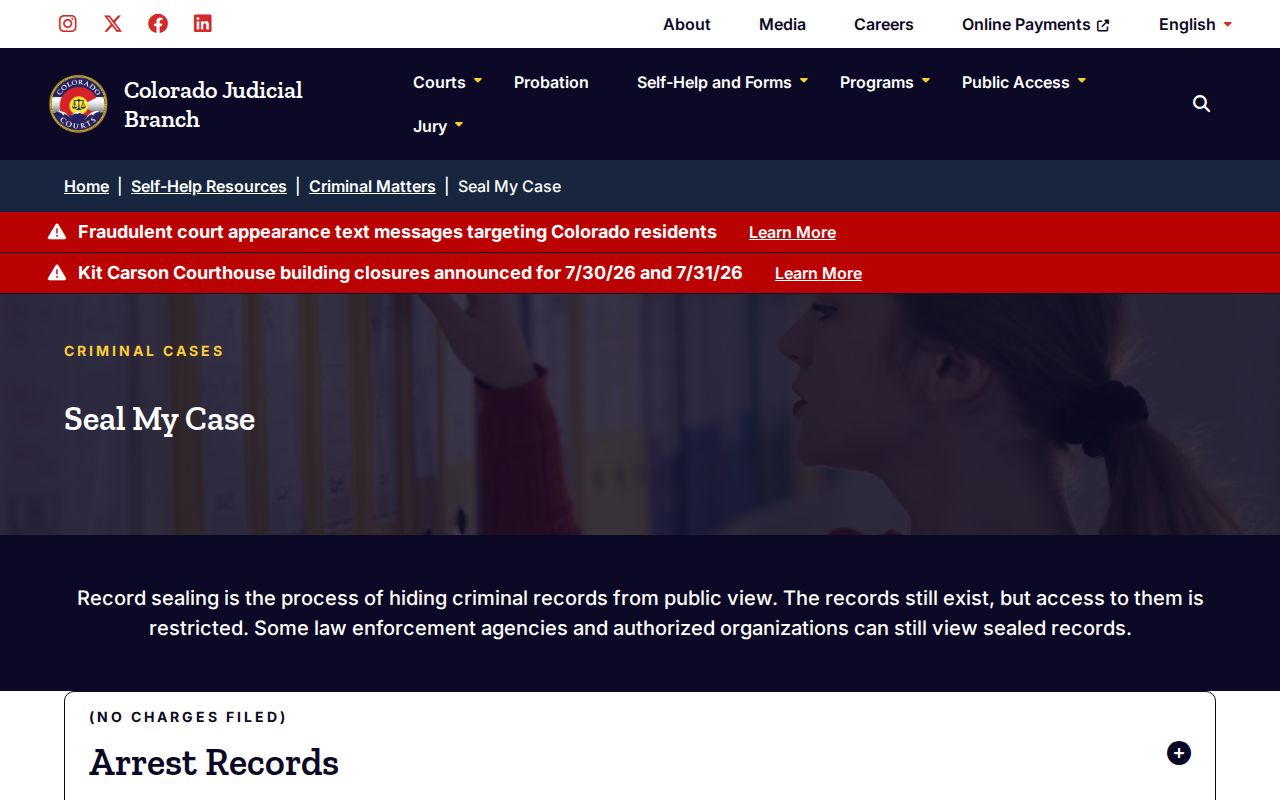
Sealing instructions matter to criminal court records because public access may change after a case is dismissed, completed, or otherwise eligible.
Search Summit County Criminal Court Records
Start with the Colorado Judicial Branch docket search for public hearing information. Criminal case classes observed or documented include CR for criminal matters and M or T for some misdemeanor or traffic-related matters. Search by Summit County, date range, party name, attorney, or case number parts. The docket can confirm a hearing, but it does not provide the full criminal file.
- Search the Summit County docket by name, case number, case class, court type, or attorney.
- Read the hearing type and case number carefully before assuming a charge or outcome.
- Use the court Record/Document Request Form for a Complaint/Information, Disposition/Sentence Order, Protection Order, Ticket, or ROA.
- Wait for clerk review because sealed, juvenile, suppressed, and protected-information records may be restricted.
- Use the CBI records check only when a statewide criminal history arrest record is needed instead of a court file.
CoCourts may provide paid case-summary information for eligible non-sealed, non-juvenile district and county cases. It can show public ROA fields, charges, dispositions, pleas, sentences, and scheduled events, but it does not provide full filings or certified copies.
Summit County Criminal Case Flow
Criminal court records build over time. A charge filed today may not have a plea, sentence, or final disposition yet. That is why the date of the docket entry and the current status of each charge matter. A record can show accusations that later change, are reduced, are dismissed, or end in a sentence after a guilty plea or verdict.
Case flow: Charges Filed › Arraignment › Pretrial and Motions › Plea or Trial › Disposition › Sentencing
| Stage | What Happens |
|---|---|
| Charges Filed | The prosecutor files a complaint or information, and the charge record becomes part of the court case. |
| Arraignment | The defendant is advised of the charge and plea issues begin. |
| Pretrial and Motions | The court handles scheduling, evidence issues, motions, bond conditions, and negotiations. |
| Plea or Trial | The case resolves by plea, trial verdict, dismissal, or another court-approved outcome. |
| Disposition | The court records the current or final outcome for each charge. |
| Sentencing | The court imposes jail, probation, fine, restitution, treatment, or other conditions when required. |
What Summit County Criminal Records Show
A criminal court record can include both the event history and the final result. The research file notes that CoCourts ROA summaries usually include status, court, case number, case type, case file date, close date, judge or magistrate, agency, sentence date, parties, charges, disposition, plea, and scheduled events. Docket results may show less, such as date, time, duration, name, case number, hearing type, location, appearance type, and courtroom.
| Field | What It Shows |
|---|---|
| Case Number | Year, case class, and sequence, such as a Summit County CR case. |
| Defendant | The public party name, with protected victim, officer, juror, and address details omitted. |
| Charge | The offense filed by the prosecutor, which may later be amended, reduced, or dismissed. |
| Plea | The defendant's formal response, such as guilty or not guilty. |
| Disposition | The outcome of the charge or case, including dismissal, conviction, acquittal, or other result. |
| Sentence | Jail, probation, fine, restitution, treatment, or conditions imposed after conviction. |
| Scheduled Events | Upcoming or past hearings such as arraignment, hearing, or sentencing hearing. |
Summit County Charges vs Convictions
A charge is an accusation filed in court. A conviction is a guilty finding or accepted guilty plea. Summit County criminal court records can show charges that remain pending, are amended, are dismissed, are reduced, or end without conviction. Read each charge line with its disposition before treating a case summary as an outcome.
| Charge | Conviction | |
|---|---|---|
| Record Stage | Filed after arrest or summons review. | Entered after guilty plea or guilty verdict. |
| Meaning | An allegation that must still be resolved. | A court outcome finding guilt. |
| Where It Appears | Complaint, information, ROA, docket, or case summary. | Disposition, sentence order, ROA, or criminal history. |
| Why It Matters | May change before final case resolution. | Can trigger sentence, fines, probation, or sealing wait periods. |
Sealed and Expunged Criminal Records
Sealing hides a criminal record from public view, but the record still exists and may remain available to law enforcement or authorized entities. Expungement is more limited and can mean the record is removed, destroyed, or treated as not existing under a specific statute. Colorado sealing law includes no-charge arrests, non-convictions, eligible convictions, human-trafficking victim records, pardoned offenses, and conduct that is no longer illegal.
| Sealed | Expunged | |
|---|---|---|
| Public View | Hidden from ordinary public access. | Removed or treated as not existing where statute allows. |
| Record Status | The court or agency record still exists. | The legal effect depends on the statute and case type. |
| Common Use | Adult arrest and criminal record sealing. | More common in juvenile or special statutory contexts. |
| Access Tool | Seal My Case forms and limited sealed-case confirmation. | Use specific Colorado Judicial Branch forms or legal authority. |
The image below comes from the Colorado sealed case search page.
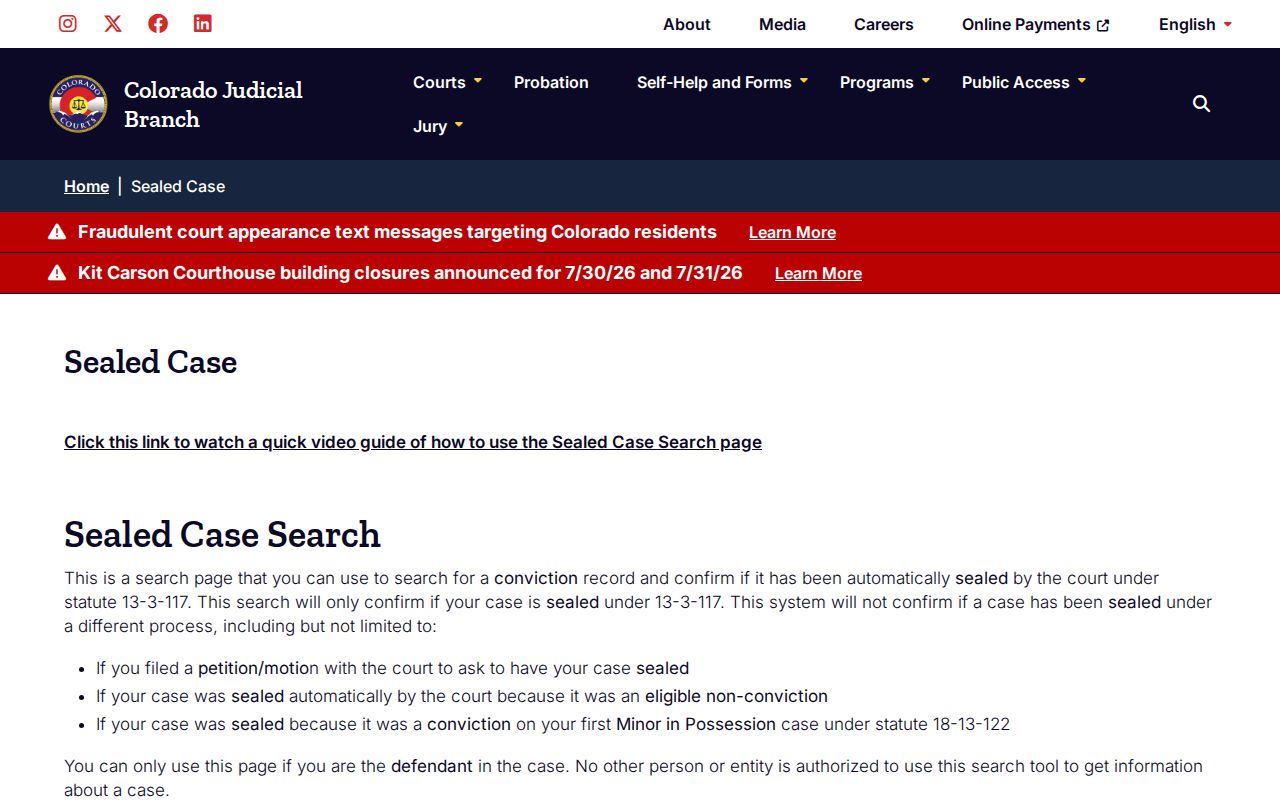
The sealed-case search is narrow: it is for defendants confirming certain automatic sealing under C.R.S. 13-3-117, not for public third-party browsing.
Statewide Criminal History Records
A Summit County criminal court record is not the same as a statewide criminal history. The court request form points people seeking statewide criminal history arrest records to the Colorado Bureau of Investigation Records Check. That system is separate from Summit Combined Courts and should be used when the purpose is a statewide arrest-history check rather than a local court document.
The image below comes from the CBI Records Check portal.
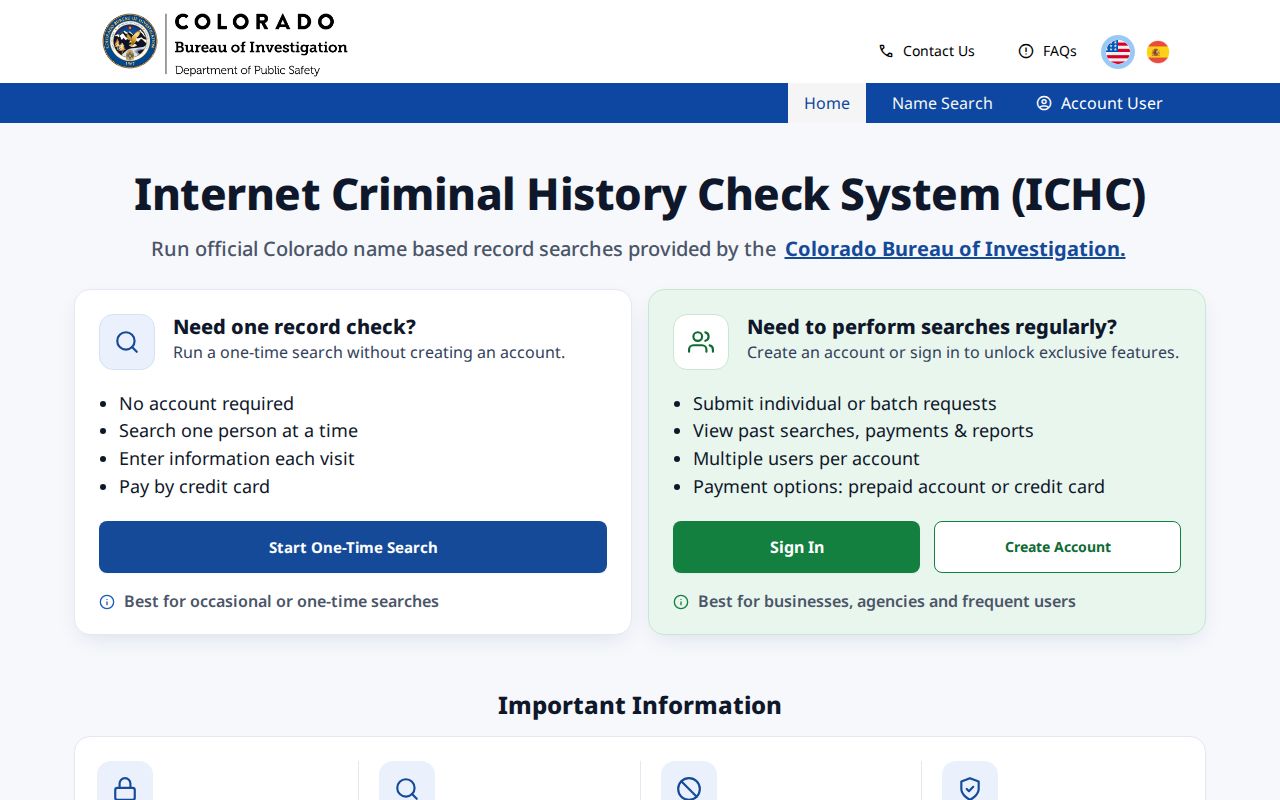
CBI may answer a broad criminal-history question, while Summit County criminal court records answer what happened in a specific court case.
Restricted Summit County Criminal Records
Juvenile cases, sealed cases, suppressed cases, protected victim data, child witness information, mental health details, protected addresses, SSNs, financial account data, police officer information, juror information, and long narratives may be withheld or redacted. CoCourts says sealed and juvenile case types are excluded, and its public summaries omit SSNs, street addresses, victims, police officers, jurors, and long narratives.
Sex offender registry information is a separate public-safety system, not the full Summit County criminal case file. The image below comes from the Colorado public sex offender registry.
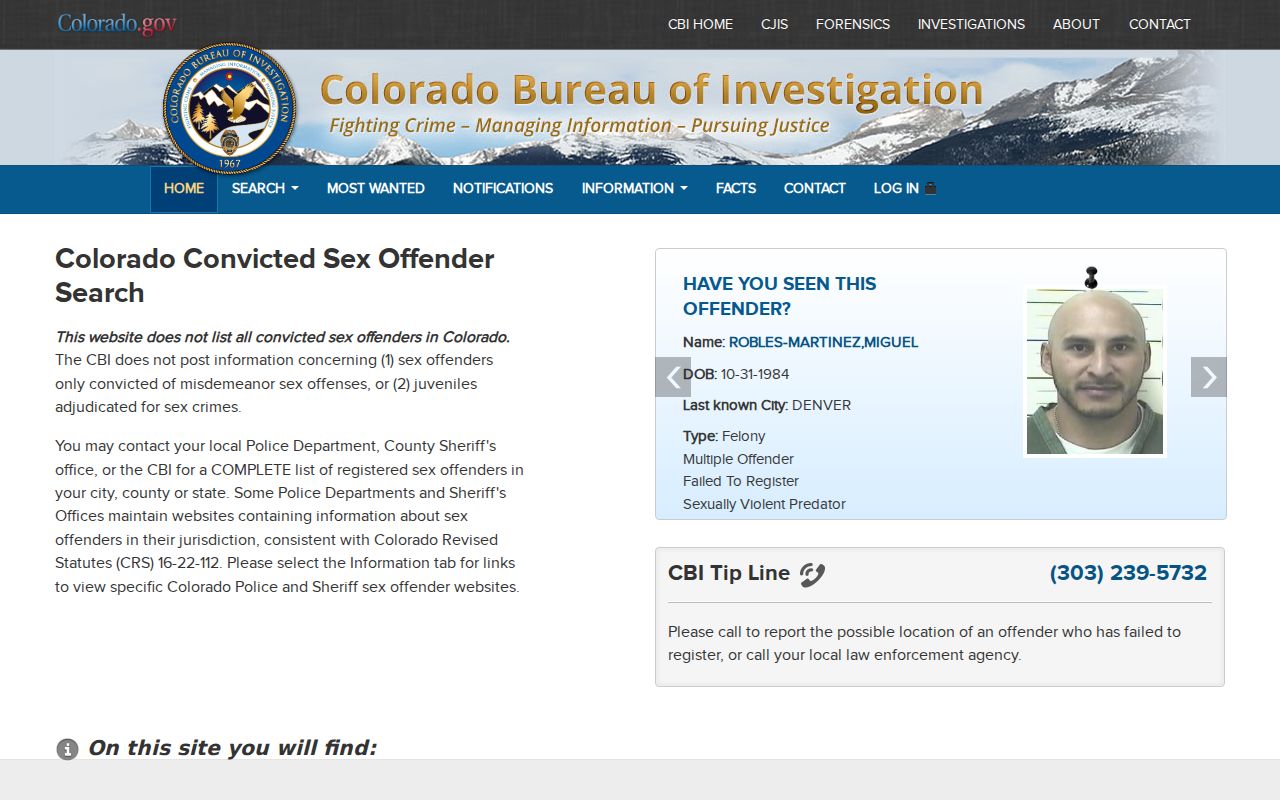
The registry can be relevant after certain convictions, but the plea, disposition, sentence, and case events remain court-record questions.
DA and Public Defender Records
The 5th Judicial District Attorney serves Clear Creek, Eagle, Lake, and Summit counties. Sheriff records research says arrest-related reports may need to be obtained from the District Attorney's Office at 504 Airport Road, District Attorney's Annex, Breckenridge, CO 80424, phone 970-453-3520, and the requester may also be referred to the courts for information outside the sheriff's release authority. The current elected DA name was not confirmed in the research, so it should not be named here.
The Colorado Judicial Branch public defender application page explains that adults use JDF 208 and juveniles use JDF 219. There is no filing fee. The Public Defender reviews the paperwork, informs the court whether the person qualifies, and the court makes the final decision.
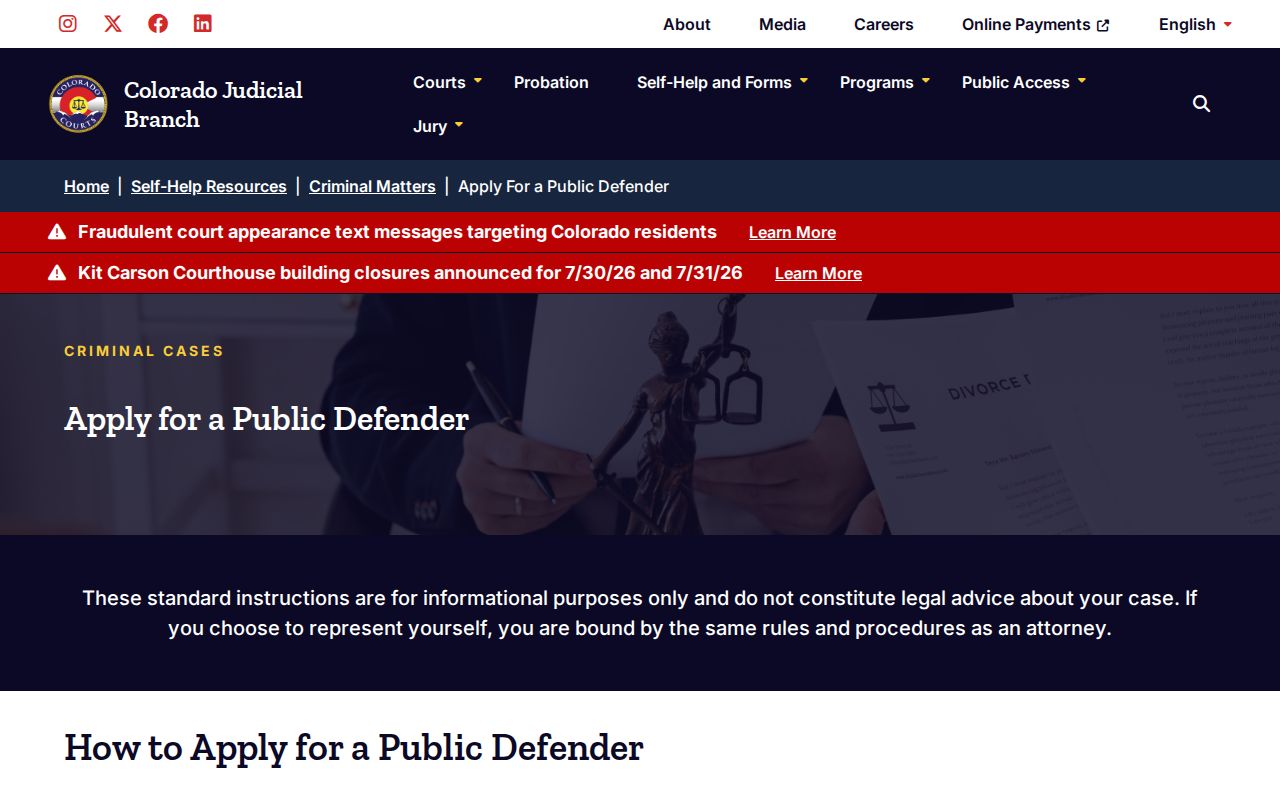
Public defender eligibility is part of the criminal case process, but it is separate from ordering copies of criminal court records.
Important: Do not use casual court lookups for credit, tenant, insurance, employment, or other FCRA-regulated decisions.